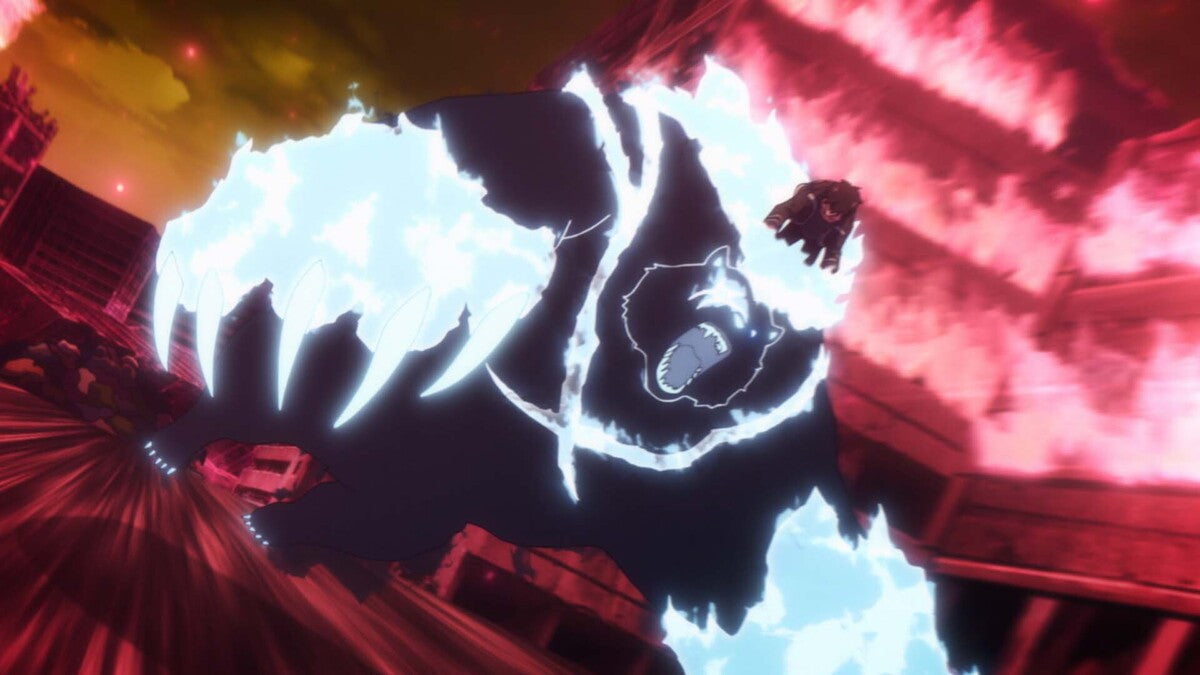
《Solo Leveling》 Strongest Movement Skill: Analyzing Sung Jin-Woo's "Shadow Exchange," the God-Tier Tactical Core That Ignores Distance
 ANIHK 編輯部
Fundamental Analysis of Shadow Exchange
In "Solo Leveling", the protagonist Sung Jin-Woo's strength is not only reflected in his world-destroying destructive power and bottomless magical energy, but also in his unparalleled tactical mobility. Among these, the "Shadow Exchange" skill, exclusive to the Shadow Monarch, is the key to achieving "global strike, instant support". This skill renders distance meaningless, becoming the strategic core that transforms Sung Jin-Woo from a mere powerhouse into a true monarch.

Fundamental Analysis of Shadow Exchange
What is "Shadow Exchange"?
"Shadow Exchange" is one of the class-exclusive skills Sung Jin-Woo obtained after becoming the Shadow Monarch, considered one of the most strategically valuable abilities in 'Solo Leveling'. Its effect is extremely simple yet powerful: Sung Jin-Woo can instantly exchange positions with a specified shadow soldier.
Basic Skill Information:
- Skill Type: Spatial movement type
- Consumption Type: Mana consumption
- Cooldown Time: Decreases with level (hours → minutes)
- Effective Range: Theoretically unlimited
- Class Restricted: Exclusive to Shadow Monarch
Activation Conditions and Limitations
To successfully activate Shadow Exchange, the following conditions must be met:
Required Conditions:
- Pre-placement: Must pre-place a shadow soldier at the target location as an "anchor" for spatial coordinates
- Mana Consumption: Skill activation requires significant mana consumption
- Line of Sight or Perception: Must be able to perceive the existence of the target shadow soldier
- Soldier Survival: The target shadow soldier must be in a usable state
Skill Limitations:
- Extremely long initial cooldown time
- Cannot exchange with shadow soldiers already in combat
- Affected by Sung Jin-Woo's current mana limit
- Requires pre-battle strategic deployment
Evolution Process of the Shadow Exchange Skill
Early Stage: Strategic-level Survival Skill
Like Sung Jin-Woo's other abilities, "Shadow Exchange" was not perfect from the start. In the early stages of the story, the biggest limitation of this skill was its long cooldown time.
Early-stage Characteristics:
- Cooldown Time: As long as several hours
- Usage Frequency: Can only be used 1-2 times daily
- Tactical Positioning: Trump card for critical moments or life-saving last resort
- Application Limit: Must carefully plan usage timing
Mid-stage Development: Tactical-level Regular Skill
As Sung Jin-Woo's level increases and he invests many attribute points in "Intelligence", the limitations of this skill are greatly reduced.
Mid-stage Improvements:
- Cooldown Time: Shortened to 30 minutes - 1 hour
- Usage Frequency: Can be used multiple times daily
- Tactical Flexibility: Begins to be applied in active attacks
- Mana Efficiency: Consumption relatively reduced
Late-stage Complete Form: God-level Mobility
In the later stages of the story, when Sung Jin-Woo's power approaches its peak, "Shadow Exchange" has evolved into a nearly perfect form.
Late-stage Features:
- Cooldown Time: Only a few minutes
- Usage Frequency: Can be used almost at will
- Tactical position: Upgraded from strategic-level to tactical-level routine operation
- Global coverage: Achieving world-class deployment with Shadow Army
Key role of intelligence attribute:
- Increase total mana capacity to support more frequent usage
- Reduce cooldown time for all skills
- Enhance stability of spatial movement
- Improve ability to simultaneously maintain multiple anchors
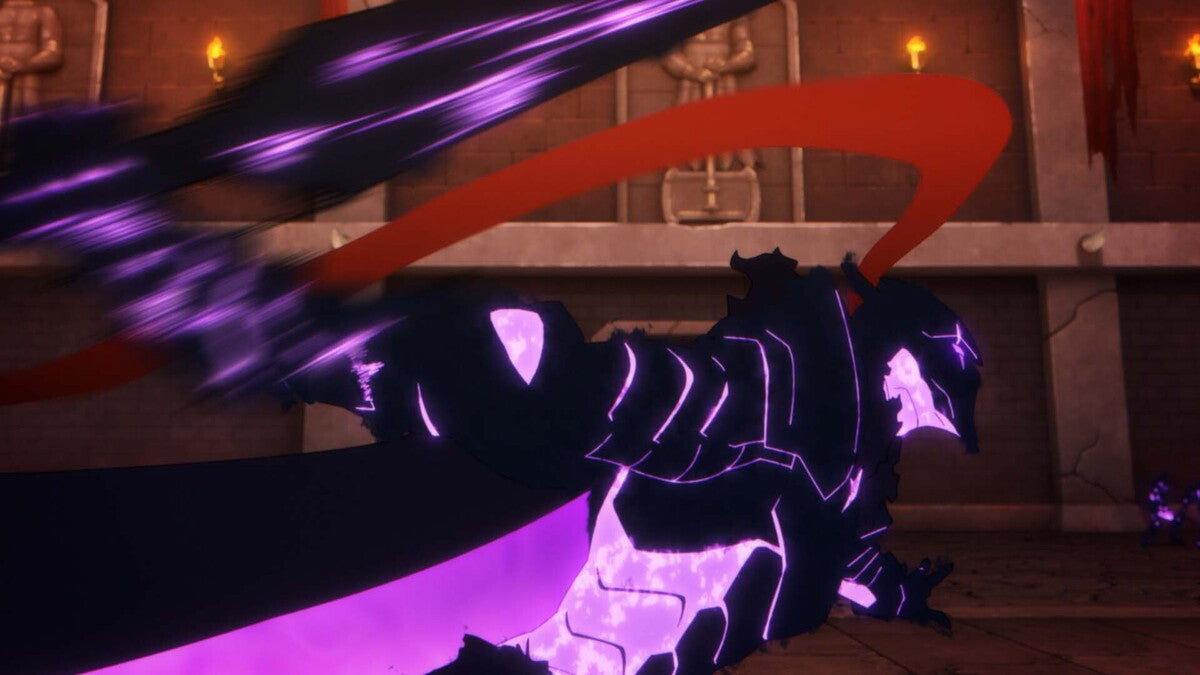
Detailed explanation of Shadow Exchange's 7 tactical applications
1. High-speed support and emergency rescue
Shadow Exchange's most classic application is undoubtedly emergency support. No matter how far the distance, Sung Jin-Woo can instantly arrive at locations needing assistance.
Specific application scenarios:
- Little sister's school crisis: Instantly appearing to protect during monster invasion
- Liu Chenhao's perilous rescue: Saving a close friend from the brink of death
- Hunter Association emergencies: Responding to sudden S-class threats
- Family safety protection: 24-hour uninterrupted protection system
Tactical advantages:
- Response time approaches zero delay
- Ignores geographical and traffic limitations
- Surprising rescue effect
- Establishing absolute security
2. Surprise Attacks and Decapitation Operations
Sung Jin-Woo utilized Shadow Exchange as the deadliest assassination tool, achieving elusive surprise attacks through pre-placement.
Tactical Characteristics:
- Surprise Advantage: Attack angles the enemy cannot predict
- Decapitation Tactics: Directly attacking enemy command centers
- Psychological Shock: Causing enemy morale collapse
- Swift Decisive Victory: Avoiding prolonged wars of attrition
Classic Battle Example: During Japan's S-rank gate crisis, Sung Jin-Woo instantly appeared across Japan through pre-deployed Shadow Soldiers to hunt giant monsters, shocking the world with his efficiency and elusive movement patterns.
3. Synchronized Global Front Deployment
When facing a world-class crisis, Shadow Exchange reveals its true strategic value—single-handedly combating global disasters.
Deployment Strategy:
- Strategic Dispersion: Dispatching top-tier Shadow Soldiers to various countries
- Self-Deployment: Moving between battlefields through exchange
- Command Coordination: Real-time command of global combat operations
- Situation Stabilization: Maintaining world balance single-handedly
Practical Application: When giant gates appeared simultaneously around the world, Sung Jin-Woo dispatched top legion commander-level soldiers like Beru and Igris to different countries, while he himself became the mobile firepower between battlefields.
4. Perfect Escape and Tactical Retreat
When facing opponents you cannot defeat or when trapped in a desperate situation, Shadow Exchange provides the perfect means of survival.
Retreat Advantages:
- Instant Disengagement: Instantly escapes danger zones
- Zero-risk Retreat: Gives enemies no chance to pursue
- Preservation of Strength: Avoids unnecessary losses
- Reorganization Opportunity: Gains time to replan