
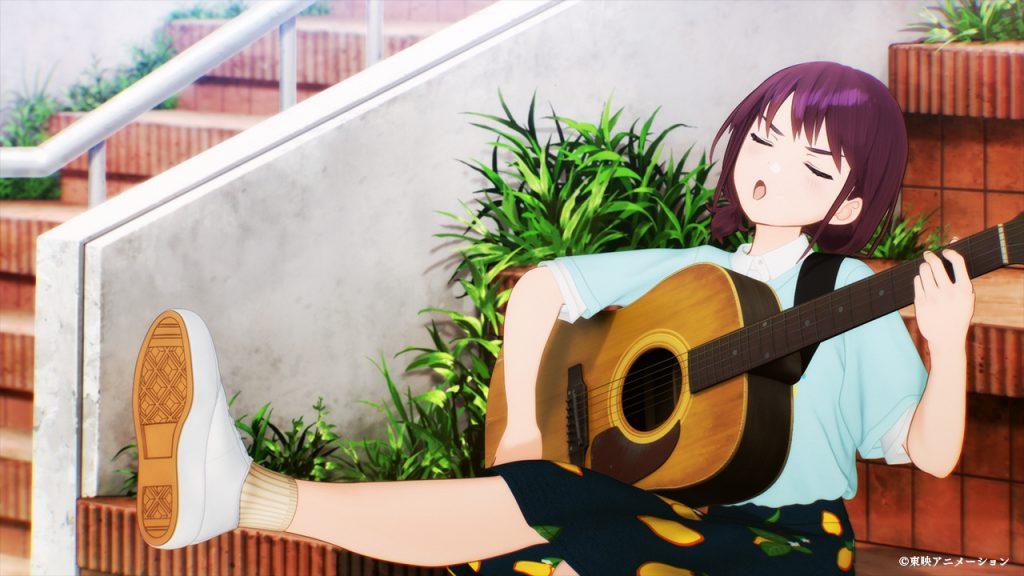
More Than Escapism: Analyzing the Justice and Rebellion Behind Inuzuka Nena's "School Refusal" in "Girls Band Cry"
 ANIHK 編輯部
The Truth Behind "School Refusal": The Price of Fighting School Bullying
In "Girls Band Cry," an anime depicting girls crashing against reality through music, one of the most distinct labels of the protagonist Nina Iseri is "school refusal" (referring to the inability to attend school normally due to psychological or social factors). However, simply categorizing her behavior as escapism or fragility completely misunderstands the core of this character. Nina's "school refusal" does not stem from personal weakness, but is the painful price she paid for adhering to her inner sense of justice and refusing to compromise with the world.
The Truth Behind "School Refusal": The Price of Fighting School Bullying
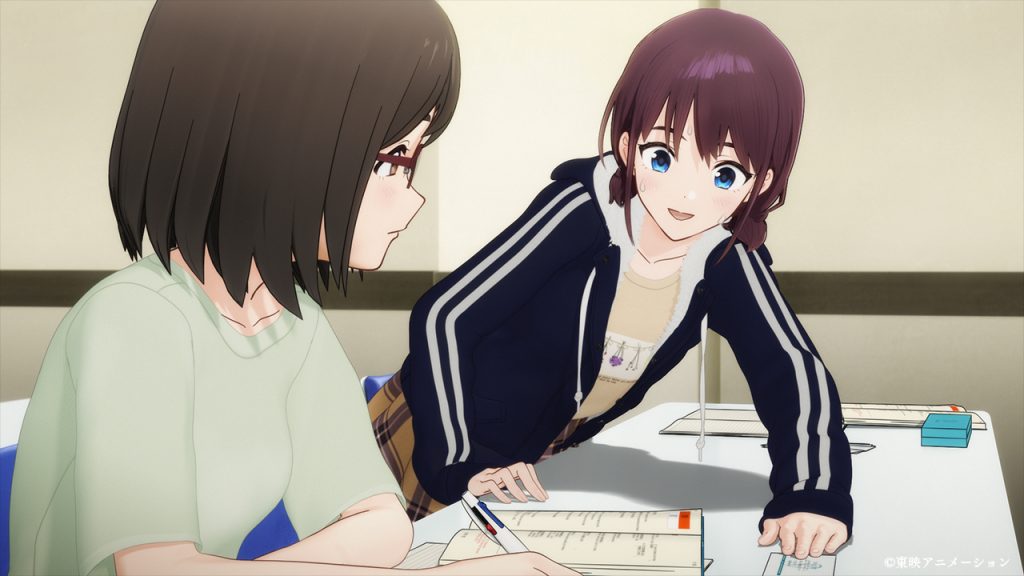
The story clearly reveals that the direct reason Nina Iseri chose to leave school was due to school bullying. But more crucially, she was not the initial target of the bullying. Nina initially stood up to help a classmate who was being bullied, but this sense of justice made her the new target for the perpetrators. Faced with this upside-down situation, she could not accept the unspoken rule that "enduring and apologizing would settle the matter."
For Nina, the essence of the problem was not being bullied, but rather that "what is right" was being trampled upon. She could not turn a blind eye to bullying, and even more so, she could not distort her own beliefs for the sake of returning to peace after becoming a victim herself. Therefore, her "school refusal" was not a surrender to bullying, but the most thorough break and non-cooperation with the entire school environment that ignored justice.

Betrayed "Rightness": The Dual Failure of Family and School
What worsened Nina's situation was the dual pressure from her family and school. The school, which should have protected students, chose a muddled approach to handling the situation; and her father, a well-known educator, wanted her to accept an apology in exchange for a university recommendation, treating the matter as a bargaining chip.
Her father's lack of understanding became the final straw that broke Nina. At the time she needed support the most, the person closest to her stood on the side of the "social norms" she was resisting, demanding that she abandon her principles for personal gain. This made Nina deeply realize that her "sense of rightness" was isolated and unsupported in this world. This feeling of being betrayed by the whole world—this anger and loneliness—became her deepest inner trauma, and also explains why she was extremely distrustful of others when she first arrived in Tokyo.
From the Classroom to the Live House: Transforming Trauma into the Power of a Scream
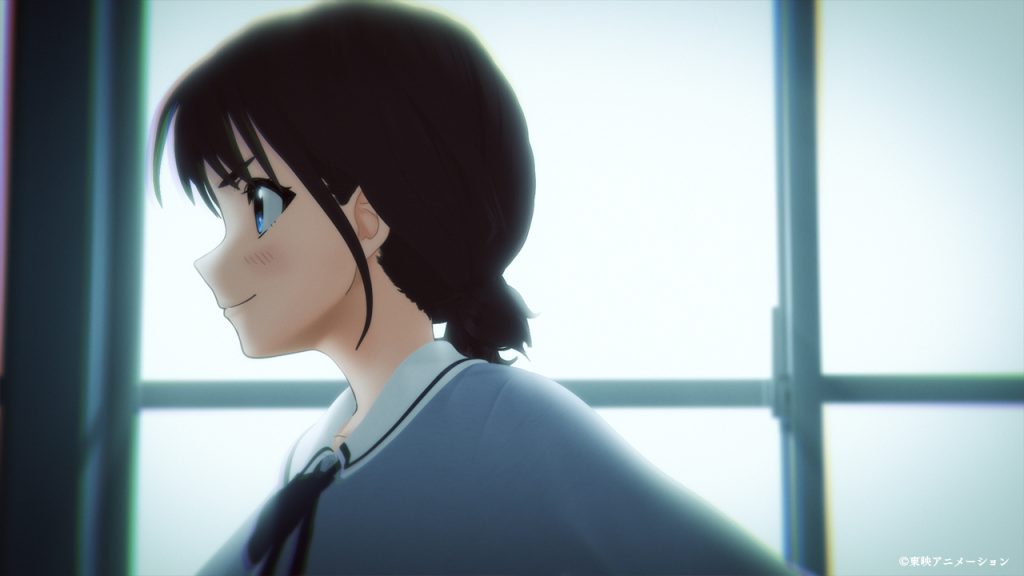
"School refusal" caused Nina to lose her traditional sense of belonging, but it also pushed her toward the only outlet where she could express everything—music. She left her hometown Kumamoto for Kawasaki precisely to find a place where her "sense of rightness," which made her feel out of place, could find a home.
On the stage of the Live House, she finally found it. Music became her weapon to fight back against the world, her lyrics were the accusations she had never spoken aloud, and her screams were the embodiment of all her anger and sorrow. In the band "TOGENASHI TOGEARI," her "troublesome" and "stubborn" nature was no longer seen as abnormal, but was understood and accepted by her companions. She transformed the trauma of "school refusal" into the most genuine and explosive emotional energy in her creative work. This cry born from real pain is precisely why their music can deeply move people's hearts.
Conclusion: School refusal is the starting point of a rock soul
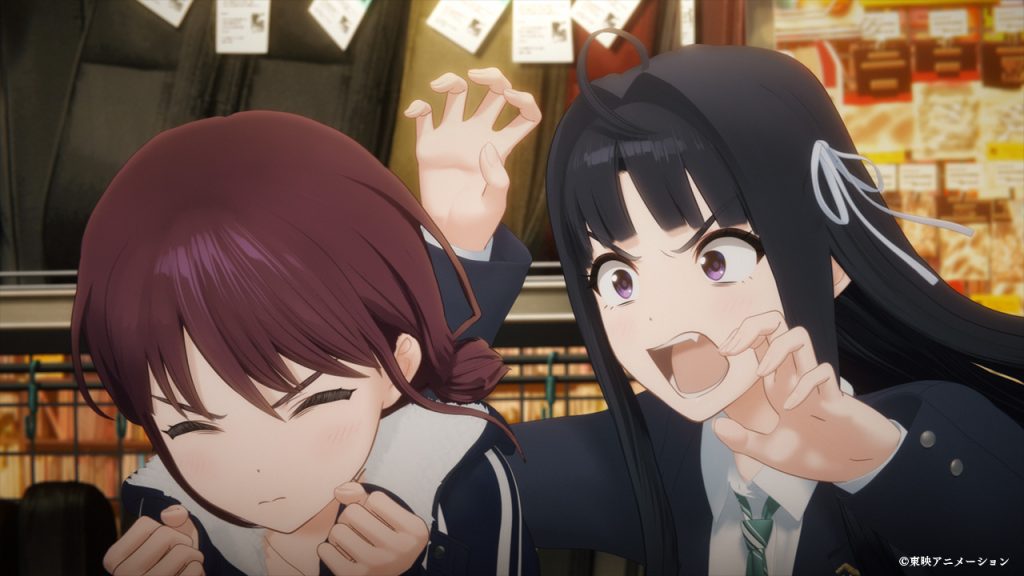
Nina Iseri's "school refusal" is the starting point for understanding her entire character arc. It is not merely a background setting, but the root of her personality, behavior, and musical creation. This experience shaped her rebellious spirit, making her unable to tolerate any hypocrisy or compromise, and giving her an extraordinary longing for genuine companionship. She did not choose to escape, but rather chose the most intense way to remain true to her soul. From this perspective, "school refusal" is not a stain on her life, but rather the most profound and authentic medal of honor for her as a rock vocalist.
Browse Girls Band Cry merchandise now
留言 (0)